
How Yoga Can Support Everyday Stress and a Calmer Nervous System
Most of us know the feeling — a mind that won’t switch off, even when nothing urgent is happening. That “wired but tired” feeling. All of which can be signs of a chronically stressed nervous system. Here’s how yoga and breath can work together to support your nervous system, and how the science also agrees.
I teach yoga with one key intention: holding space for individuals to be more comfortable with slowness in a fast-paced world. One way in which we can become more aware of the feeling of slowness is through a very central element to the practice of yoga — the breath.
Why breath matters so much
Slow, controlled breathing signals to the body that it is safe to settle. In yoga, the breath is not separate from movement — they are explored and intertwined together. Flowing movements and stronger postures up-regulate the breath, whilst slower movements and stillness can help invite a slower rhythm of breath. By exploring both dynamics in a yoga class, we can begin to build a deeper awareness of how our breath can fluctuate between states. This awareness can often make it easier to notice when tension arises in our body, and thereby use our breath to ease it. A simple but powerful remedy that we can access every day to help support a healthy nervous system.
What the research suggests
A 2017 meta-analysis found that yoga practices such as movement, breathing and meditation, when utilised regularly, were associated with reductions in physiological stress markers including cortisol and resting heart rate.1 Whilst I always advise that yoga isn’t a substitute for professional mental health treatment, science does support yoga as being an effective tool for supporting stress.
What a class actually looks like
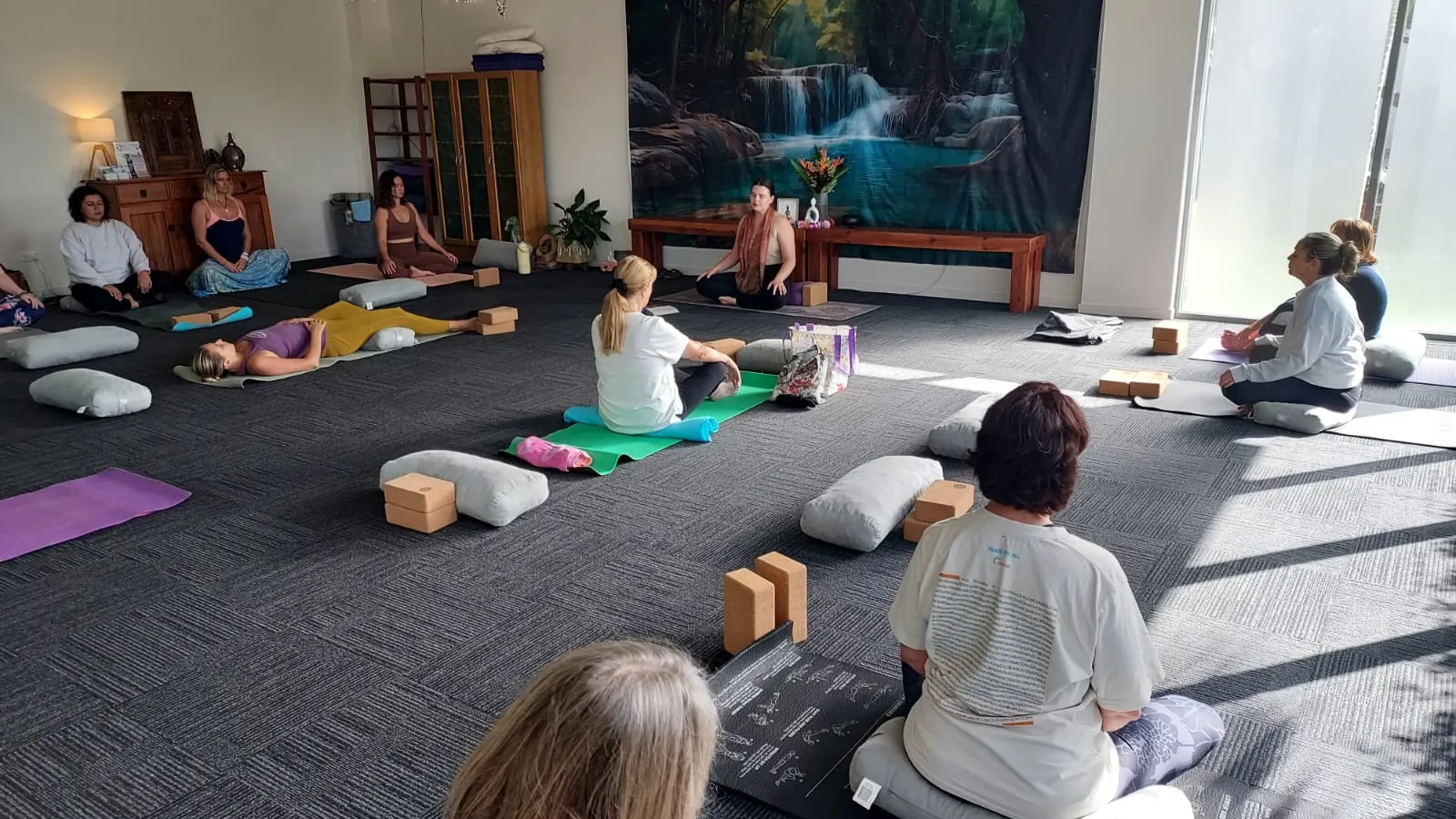
My “Yoga & Meditation” classes at Health Hub are taught in a way that paces and supports the nervous system — we slowly build and prepare the body for strength and flow and always finish with slower movements, deeper breathing and meditation. Given how effective yoga can be, accessibility to yoga is incredibly important to me. As such, options are always given throughout my classes to support total beginners right through to experienced practitioners.
When it’s worth seeking support beyond a yoga class
If stress or anxiety is affecting your sleep, relationships or daily functioning in a significant way, yoga can be a supportive addition to your routine; however, it is not a substitute for professional mental health support. I would always encourage that conversation alongside, not instead of, coming to a yoga class. If you are ever in need of a referral to mental health support, please let me know as I have an excellent network of recommendations.
A place to start
If you’re new to yoga or just curious, come along to a class — you’re welcome exactly as you are, no experience required. I also offer private 1:1 yoga sessions for those who are seeking a more individualised and therapeutic approach to yoga.
Reference
- Pascoe MC, Thompson DR, Ski CF. Yoga, mindfulness-based stress reduction and stress-related physiological measures: A meta-analysis. Psychoneuroendocrinology, 2017; 86: 152–168.
Important note. This article is general information only and isn’t intended to diagnose, treat, cure or prevent any condition. If stress or anxiety is affecting your daily life, please speak with your GP or a mental health professional.